What Wheels Fit A 10th Generation Honda Civic?
September 15, 2026

2016-2021 Fitment Guide
What Wheels Fit a 10th Gen Honda Civic
Quick Answer
Every 2016-2021 Honda Civic runs a 5x114.3mm bolt pattern with a 64.1mm hub bore and M12x1.5 studs, from the LX sedan to the Si coupe. The Civic Type R is the one exception in the generation: the 2017-2021 FK8 runs 5x120mm with M14x1.5 lugs, so a wheel that bolts to your Si will not bolt to a Type R. The size most 10th gen owners land on is 18x9.5 +38mm on a 235/40R18, which sits flush on lowering springs. Go below +35mm or past 9.5 inches wide and you are trimming the fender liner tab and rolling fenders.
- Bolt Pattern 5x114.3mm
- Hub Bore 64.1mm
- Stud Thread M12x1.5
- No-Mod Sweet Spot 18x9.5 +38mm
Here is what actually bolts to your 10th gen Civic, and what each step toward flush costs you in fender work. Offset is the number doing most of the work: offset is how far the wheel's mounting face sits from its true center, so a higher positive number pulls the wheel in toward the suspension and a lower number pushes it out toward the fender. Your LX and your friend's Si share the same hub, so width and offset are the only real variables between them. Your friend's Type R does not, and that is where the money gets wasted.
- Stock Specs by Trim
- The Type R Split
- Lugs, Rings & the Fender Tab
- Three Fitment Tiers
- Every Size at a Glance
- Other Civic Wheels
- FAQ
What Are the Stock Wheel and Tire Specs on a 2016-2021 Civic?
Know your factory numbers before you shop, because every size below gets measured against them. The 10th gen ran from 2016 through 2021 in the US, and Honda kept the same hub across the whole non-Type-R lineup. Only diameter, width and tire size changed by trim. Sedans ran the full 2016-2021 span, the coupe ended after 2020, the hatchback arrived for 2017, and the Si ran 2017 through 2020.
| Trim | Stock wheel | Stock tire | Bolt pattern | Stud thread |
|---|---|---|---|---|
| LX sedan and coupe | 16x7 +45mm | 215/55R16 | 5x114.3mm | M12x1.5 |
| EX, EX-T, EX-L, Touring | 17x7 +45mm | 215/50R17 | 5x114.3mm | M12x1.5 |
| Sport and Sport Touring hatch | 18x8 +50mm | 235/40R18 | 5x114.3mm | M12x1.5 |
| Si sedan and coupe, 2017-2020 | 18x8 +50mm | 235/40R18 | 5x114.3mm | M12x1.5 |
| Type R FK8, 2017-2021 | 20x8.5 +60mm | 245/30R20 | 5x120mm | M14x1.5 |
Hub bore is 64.1mm on every row in that table, Type R included. Confirm your own size on the driver-side door jamb placard before you order, since a car that has already been through a previous owner's build may not be wearing what the table says.
The Gotcha: "10th Gen Civic Wheels" Means Two Different Cars
The 10th gen is the only Civic generation that contains two bolt patterns. Your LX, EX, Sport, Si and hatchback all run 5x114.3mm. The 2017-2021 Type R runs 5x120mm, the pattern Honda uses on the Pilot and the Odyssey. Those two do not interchange, and no spacer fixes it. Only the 64.1mm hub bore is shared.
Second half of the same problem, and the part that catches people: the lug hardware is different too. Standard Civics use M12x1.5 studs. The Type R uses M14x1.5. So a used set listed as "10th gen Civic wheels" can arrive with lug nuts that will not thread onto your car even if you sorted out the pattern, and a Type R owner who buys Si takeoffs ends up with four wheels and a story.
When you are shopping a used set, ask for the trim, not the generation. If the seller says Type R, walk away unless you drive one. If you want to skip the whole question, our store filters every wheel against your exact year and trim before you see it, so a 5x120mm wheel never appears on a 5x114.3mm car.
Type R owners, your math is genuinely different and it is worth stating plainly. The factory 20x8.5 +60mm is a conservative wheel with room on both sides, which is why the most common upgrade is an 18x9.5 +45mm on a 265/35R18: more track width, a taller sidewall that survives a pothole, and a real drop in unsprung weight over the 20-inch original. Eighteen inches is the practical floor because of the Brembo front calipers, so a 17-inch wheel is off the table no matter what the bolt pattern says. Everything below this line is written for the 5x114.3mm cars.
What Lug Nuts, Hub Rings and Fender Work Do You Need?
Order conical seat lug nuts in M12x1.5 at the same time as the wheels. Your factory Honda nuts are ball seat, meaning the contact surface is rounded, and almost every aftermarket wheel is machined for a 60 degree conical seat. Put a ball seat nut into a conical seat and only a thin ring of metal carries the load, which is how studs shear. Keep the factory nuts in the trunk with the spare, because the spare is still a factory wheel.
New wheels are usually bored larger than your 64.1mm hub, commonly 73.1mm. That gap lets the wheel center itself on the studs instead of the hub, and you feel the result as a vibration around 60 mph that usually gets blamed on balancing. Hub-centric rings close it. Both parts cost very little and both come pre-matched on our wheel and tire packages, so this only becomes a problem when nobody tells you about it.
The 10th Gen Fender Liner Tab
There is a small plastic tab on the inside of the front fender liner on these cars, and on a lowered 10th gen it is the first thing your tire touches. Owners hit it well before they hit actual sheet metal, which is why people report rubbing on setups that the numbers say should clear. Bending it back or cutting it out takes a few minutes and solves a rub that otherwise sends you hunting for a different wheel.
Worth knowing before you spend anything: this is a trim job, not a fender roll. Plenty of 18x9.5 +38mm setups that get written off as "too aggressive" just needed the tab dealt with.
Skip spacers on your first set. A spacer changes your effective offset, so a 10mm spacer behind an 18x9.5 +45mm turns it into a +35mm and eats the clearance you were counting on. Pick the offset you actually want and buy that wheel.
Three Fitment Tiers for a 10th Gen Civic
These three tiers come out of real 2016-2021 Civic builds in our Fitment Gallery, not a calculator. Pick the tier that matches how much work you are willing to do to your fenders, then pick a wheel inside it. Almost every build in here runs an 18-inch wheel, and that is not an accident: 17s fit and buy you sidewall, 19s fit and look the part, but width and offset choices thin out fast at both ends.
Tier 1 · Daily
Tucked to flush, zero fender work
Where a first set should start. Nothing gets cut, rolled or pulled, your car clears speed bumps, and you still stop looking stock. Both builds below run lowering springs rather than coilovers, which is the cheapest honest way to close the fender gap.
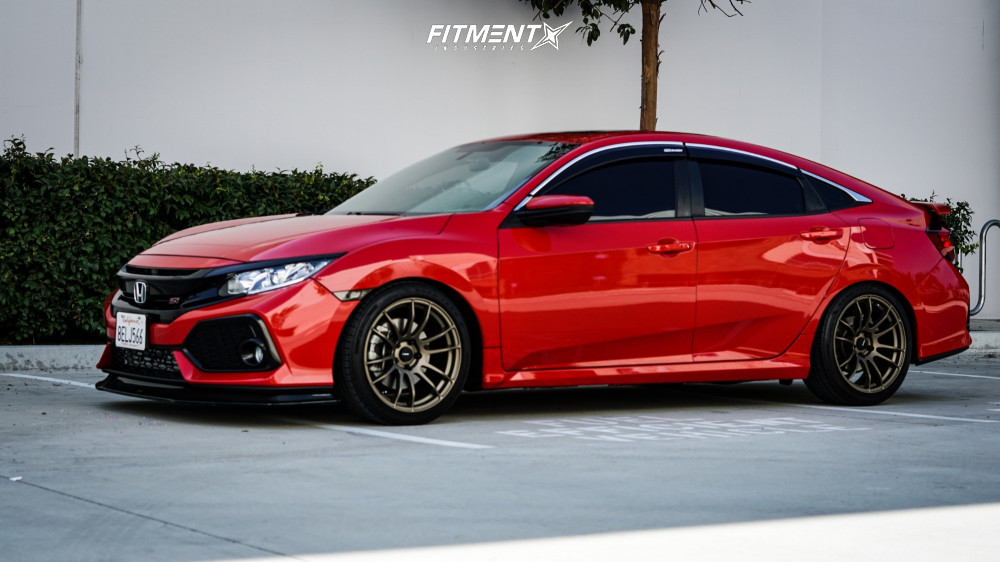
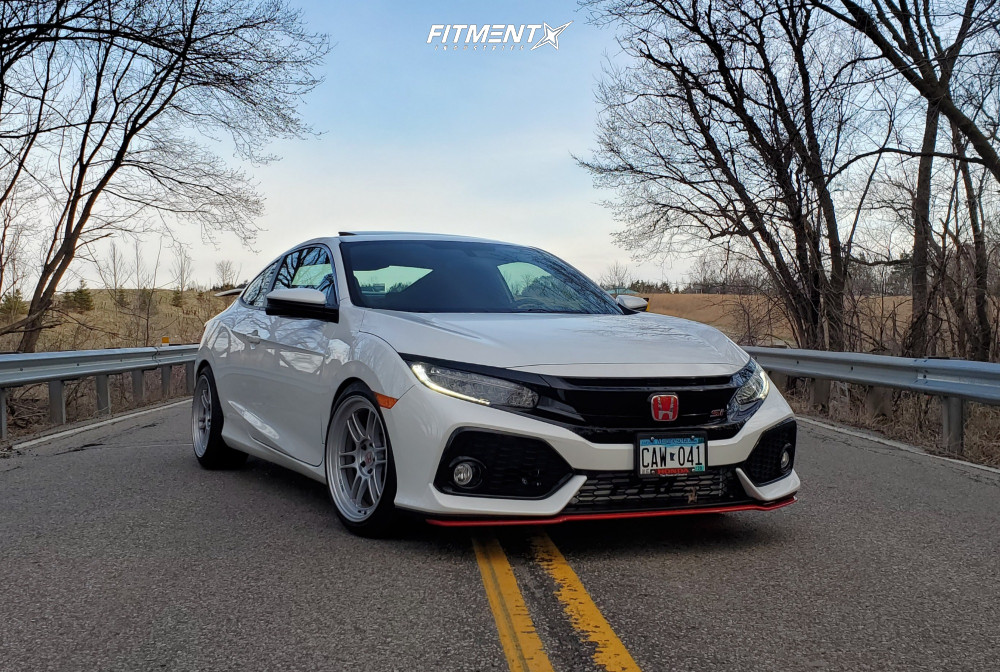
Tier 1 recommendations
Tier 2 · Flush
Fender to lip, light work at most
Flush means the tire face lines up with the fender lip, and that is the look this whole tier is built around. Coilovers do the heavy lifting here, mostly for the camber adjustment that lets you pull the top of the tire in under the arch. Expect to deal with the liner tab, and expect a light roll if you are running real tire width.
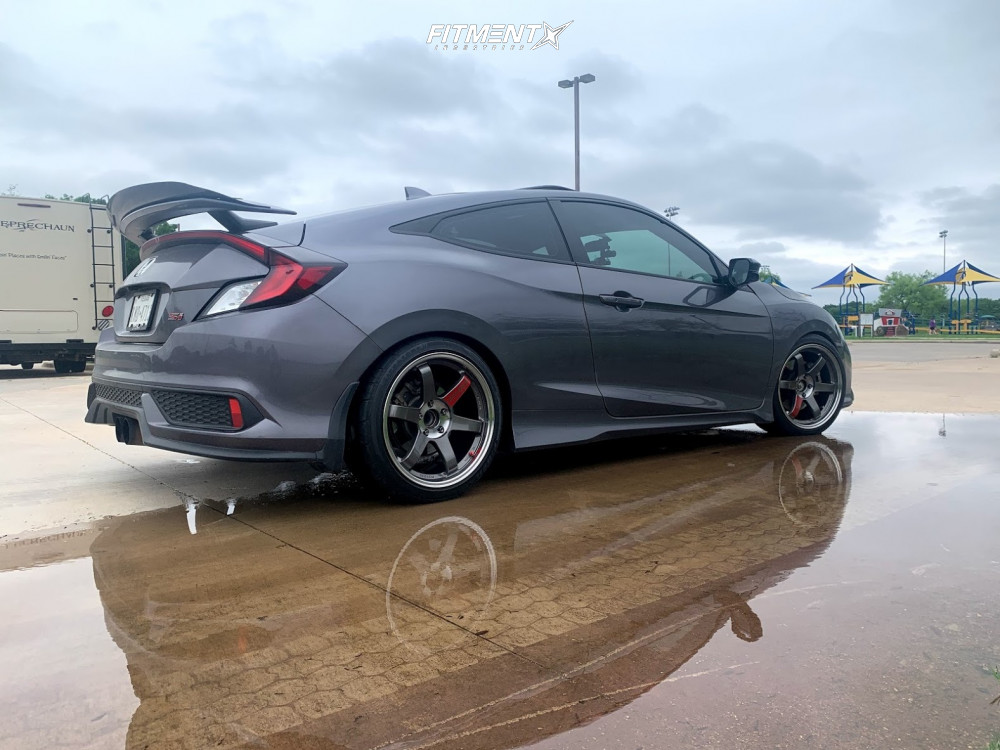
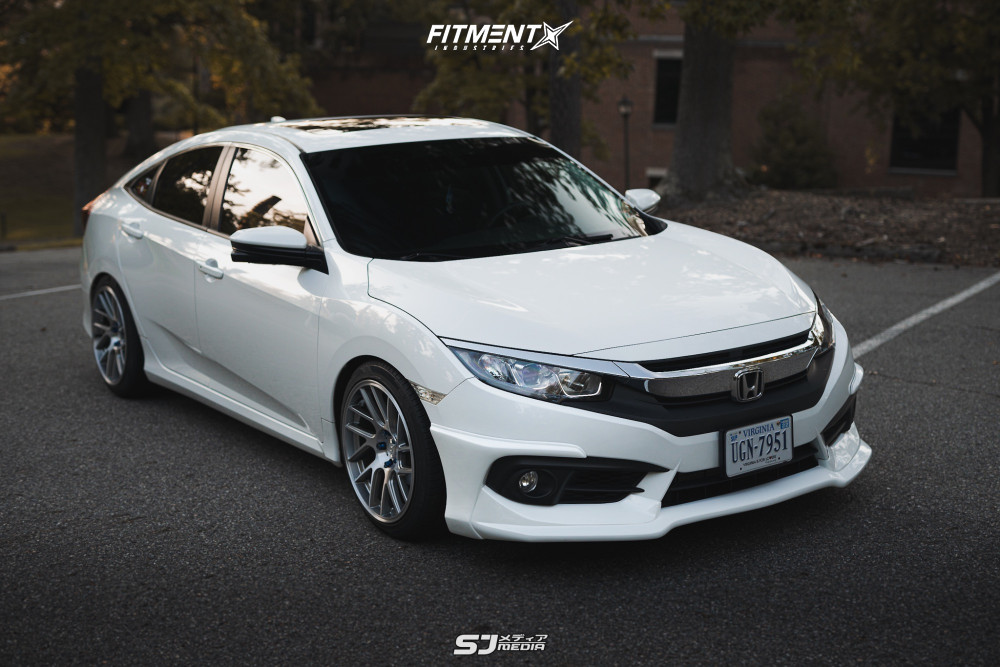
Tier 2 recommendations
- 18x9.5 +38mm on a 235/40R18, the safest version of flush
- 18x9.5 +35mm on a 235/40R18 for the last few millimeters
- Coilovers or lowering springs, plus a little negative camber up front
- Fender work: liner tab trimmed, light roll depending on how low you sit
- Good fits in this range: Anovia, Kansei, Aodhan
Tier 3 · Aggressive
Poke and slammed, fender work required
Real fabrication territory. Owners running these are pulling fenders, stacking camber and stretching tires, and your car stops being something you hand to a valet. Worth knowing before you spec it: plenty of aggressive 10th gen builds go staggered even though the car is front wheel drive, because the rear arches take more width than the fronts do and running a wider wheel out back is simply easier than fighting the steering clearance up front.
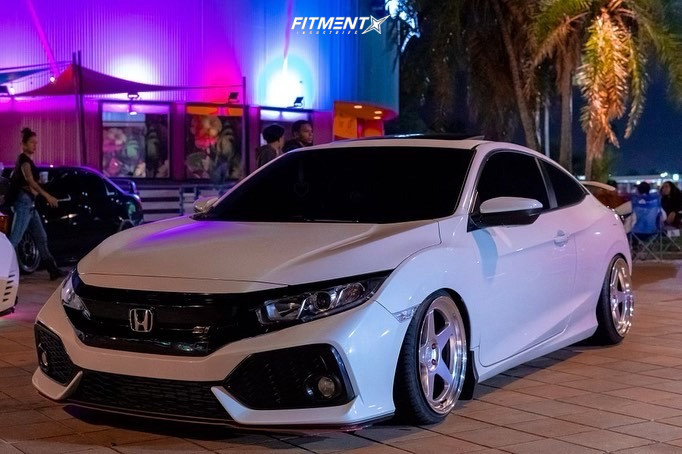

Tier 3 recommendations
- 18x9.5 +22mm on a stretched 215/35R18
- 18x10.5 +15mm front and 18x9.5 +12mm rear for a staggered setup
- Coilovers or air suspension, plus camber arms
- Fender work: rolled and pulled, liner trimmed or removed
- Honest read: this setup is slower over broken pavement, harder on tires, and worth it only if the look is the point. If you daily your Civic in a salt state, start at Tier 2.
Every 10th Gen Civic Size at a Glance
Diameter changes the look and the ride. Width and offset change whether the wheel fits. An 18-inch wheel is what the overwhelming majority of these builds run, and going to 19 starts costing you sidewall on roads that already destroy 20-inch Type R wheels.
| Wheel size | Offset | Stance | Fender work |
|---|---|---|---|
| 16x7 (stock LX) | +45mm | Factory | None |
| 17x7 (stock EX) | +45mm | Factory | None |
| 18x8 (stock Si and Sport) | +50mm | Factory | None |
| 18x8.5 | +35mm to +45mm | Tucked to flush | None |
| 18x9.5 | +38mm | Flush | Liner tab once lowered |
| 18x9.5 | +35mm | Fender to lip | Liner tab, light roll |
| 18x9.5 | +22mm | Poke | Rolled fender, camber, stretched tire |
| 18x10.5 front | +15mm | Aggressive | Pulled fenders, camber, air or coilovers |
| 20x8.5 (stock Type R) | +60mm | Factory | None, and note the 5x120mm pattern |
Fender work depends on your ride height and your tire choice, since section width varies between brands at the same printed size. A 235/40R18 from one manufacturer measures wider than the same size from another, and on a car where +3mm of offset is visible, that matters. Run your numbers through the wheel and tire clearance calculator before you order.
Which Other Civic Wheels Bolt On
Used wheels get listed as "Civic wheels" with no generation attached, and that is where money gets wasted. The 9th gen, 2012 through 2015, shares your 5x114.3mm pattern and 64.1mm bore, so those bolt on as long as the width and offset work. The 11th gen, 2022 and newer, shares them too. Both are worth watching on the used market, since a set of 9th gen takeoffs is often the cheapest way into a second set for winter.
Three hard stops. Any Civic from 2005 or earlier mostly ran a 4x100 pattern and will not physically mount. The 2017-2021 Type R runs 5x120mm, covered above. And the 2023 and newer FL5 Type R kept that same 5x120mm pattern, so those wheels do not fit your car either, no matter how good the takeoff deal looks.
If you are cross-shopping generations, the 9th gen Civic fitment guide and the 11th gen Civic fitment guide cover the sizes on either side of this one. Coming from a different platform entirely, the 2015-2021 WRX guide covers the other car this generation of Si buyers cross-shops.
Why Buy Your Civic Wheels From Fitment Industries
Every wheel in our store gets filtered against your exact year and trim before it ever shows up on your screen, checked against the largest verified fitment dataset in the industry. On a generation that carries two different bolt patterns, that filter is the difference between a spec sheet and a guarantee.
The Fitment Gallery holds more than 500,000 real builds you can filter by vehicle, offset and tire size, so you can look at a 2016-2021 Civic running the exact setup you are considering before you spend a dollar. Packages ship free to the lower 48 with free mounting, balancing and TPMS installation, and if it does not fit your car, the return is free. Our phone consultants build cars themselves, which is why there are 60,000-plus SKUs on the site and nobody here is going to read you a script. Build Now, Pay Later Through Affirm at as low as 0% APR, or use Katapult if you would rather not put it on credit.
10th Gen Civic Wheel Fitment FAQ
What is the bolt pattern on a 2018 Honda Civic?
A 2018 Honda Civic uses a 5x114.3mm bolt pattern, also written as 5x4.5 inches, with a 64.1mm hub bore and M12x1.5 studs. That covers the LX, EX, Sport, Si and hatchback. The 2018 Civic Type R is the exception and uses 5x120mm with M14x1.5 lugs.
Do Civic Type R wheels fit a Civic Si?
No, Civic Type R wheels do not fit a Civic Si. The 2017-2021 Type R uses a 5x120mm bolt pattern and the Si uses 5x114.3mm, so the wheel will not line up with your hub and no spacer corrects it. The Type R also uses M14x1.5 lug nuts against the Si's M12x1.5. Only the 64.1mm hub bore is shared between them.
Will 18 inch wheels fit a 10th gen Civic?
Yes, and 18 inches is what most 10th gen builds run. An 18x8.5 +35mm to +45mm fits with no fender work at all, and an 18x9.5 +38mm on a 235/40R18 sits flush on lowering springs or coilovers. Below +35mm or past 9.5 inches wide you are into rolled fenders and a stretched tire.
What offset is best for a 10th gen Civic?
For a flush setup with no fender work, +38mm on an 18x9.5 is the answer most 10th gen owners land on. Your factory offset is +45mm on the 16 and 17-inch wheels and +50mm on the 18s, so a +38mm pushes the wheel roughly 7 to 12mm further out per side than stock. Going to +22mm or lower gives you poke and requires fender work and camber.
Why is my 10th gen Civic rubbing when the numbers say it should clear?
Check the plastic tab on the inside of the front fender liner before you blame the wheel. On a lowered 10th gen that tab is the first thing the tire contacts, well before any sheet metal, and bending it back or cutting it out is a few minutes of work. Tire section width is the other usual cause, since a 235/40R18 from one brand measures wider than the same printed size from another.
Do 9th gen Civic wheels fit a 10th gen Civic?
Yes, 9th gen Civic wheels fit a 10th gen Civic. Both generations use a 5x114.3mm pattern with a 64.1mm hub bore and M12x1.5 studs, so check the width and offset against the sizes in this guide and you are set. Wheels from a 2005-or-earlier Civic will not fit, since those mostly used a 4x100 pattern.
More Honda Civic Fitment Guides
9th Gen Civic Wheel Fitment Guide (2012-2015)
11th Gen Civic Wheel Fitment Guide (2022-present)
See every 10th gen Civic build in the Fitment Gallery